

Levels of Organization Cells, Tissues, Organs Special Education Intro to Biology
CLICK FOR PREVIEW
$9.00
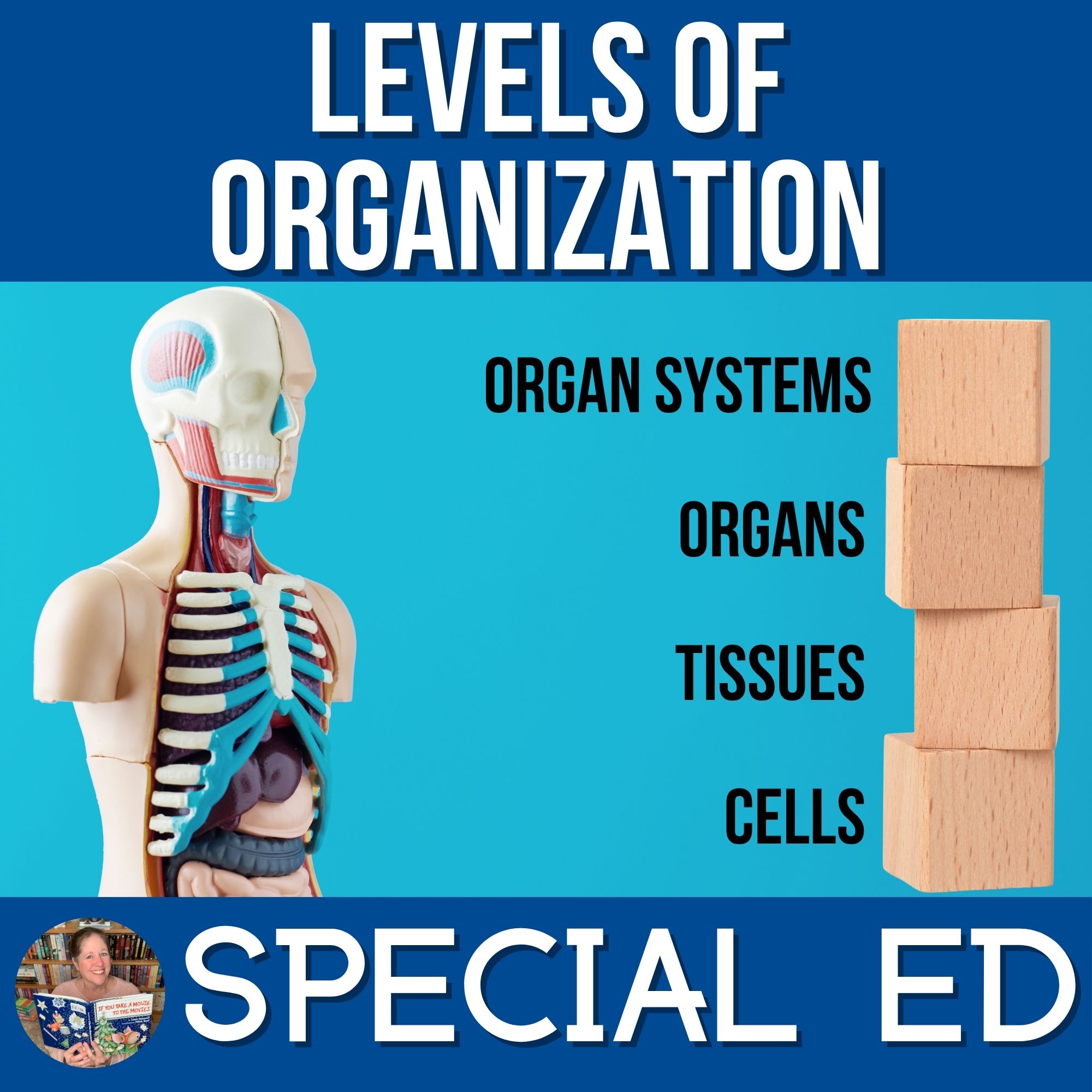
This unit on Levels of Organization is a great introduction to biology and covers cells, tissues, organs, and organ systems. It was created for students in special education settings.
This unit introduces the main levels of organization:
- cells
- tissues
- organs
- organ systems
It also addresses the concept of homeostasis and how the body maintains it.
All the information is presented in a simplified but rigorous way for students with diverse learning needs to make meaningful and authentic connections to the material.
There are many opportunities for students to engage in repeated information on these various levels of organization of living things.
In addition, many of the activities and assessments include more than one version, suggestions for differentiation, and options for presentation.
⭐Save and get this unit as part of the Basic Biology Bundle
✩✩✩ This unit has digital versions of the printable activities. There are 56 google slides and a movie version of the book.
See the preview for a more detailed look at the contents.
*****************************************************************************
Levels of Organization Unit Includes:
⭐ This unit comes in 2 complete files. One is in color and one is in black and white.
In the zipped folder you will find:
- 14 days of lesson plans
- Levels of organization activities in color
- Levels of organization activities in black and white
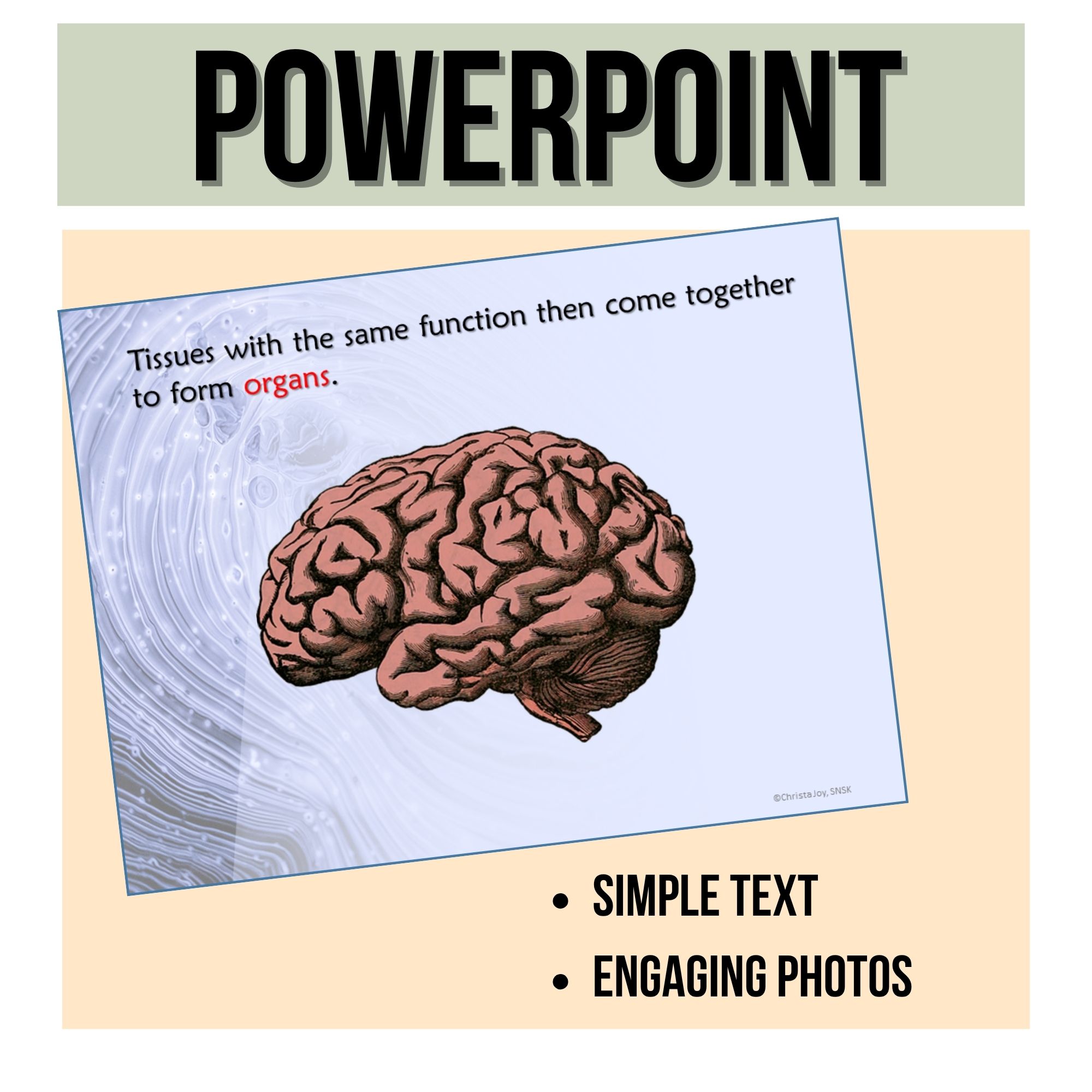
- Voice-recorded PowerPoint show
- Levels of organization PowerPoint to use with activities
- Links and directions to digital activities
Levels of organization activities:
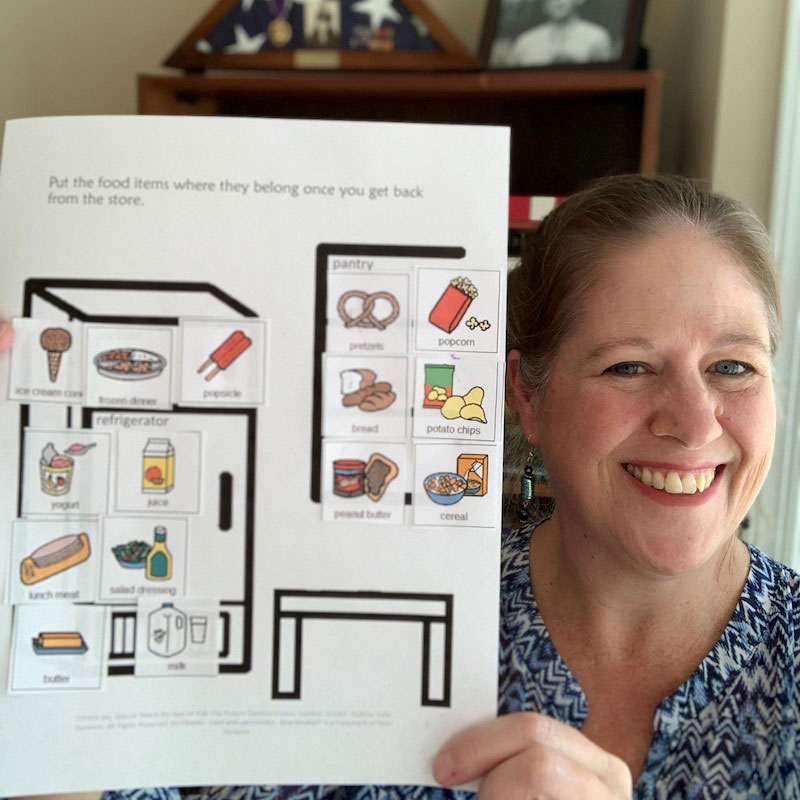
- Vocabulary board and cards with activities (includes digital version)
- Group activities
- Build organisms using labeled cups
- Bingo
- Circle map (includes digital version)
- Ordering activities (includes digital version)
- Color it in (includes digital version)
- Cells that make tissues
- Tissues that make organs
- Build it (includes digital version)
- Build tissues
- Build organs
- Build organ systems
- Maintaining homeostasis worksheet (includes digital version)
- Fill in the blank worksheets (includes digital version)
- Assessments (3 versions) (includes digital version)
*****************************************************************************
Much of what I have learned about curriculum development is incorporated in these units. For example, do not be afraid of repetition. It is critical that students with significant disabilities get to experience material over several days to be able to fully assimilate what is being taught. Also, adding visual supports to your printables and class activities helps students be able to pay more attention to the content you are presenting rather than the mechanics of what is expected. Finally, ask questions. Good questions!! Regardless of the material, if we can ask students good questions it will push them to think more deeply than before.
$9.00
Lorem.