Italy Worksheets Map of Italy Italy Coloring Page Milano Cortina Special Ed
CLICK FOR PREVIEW
$8.00
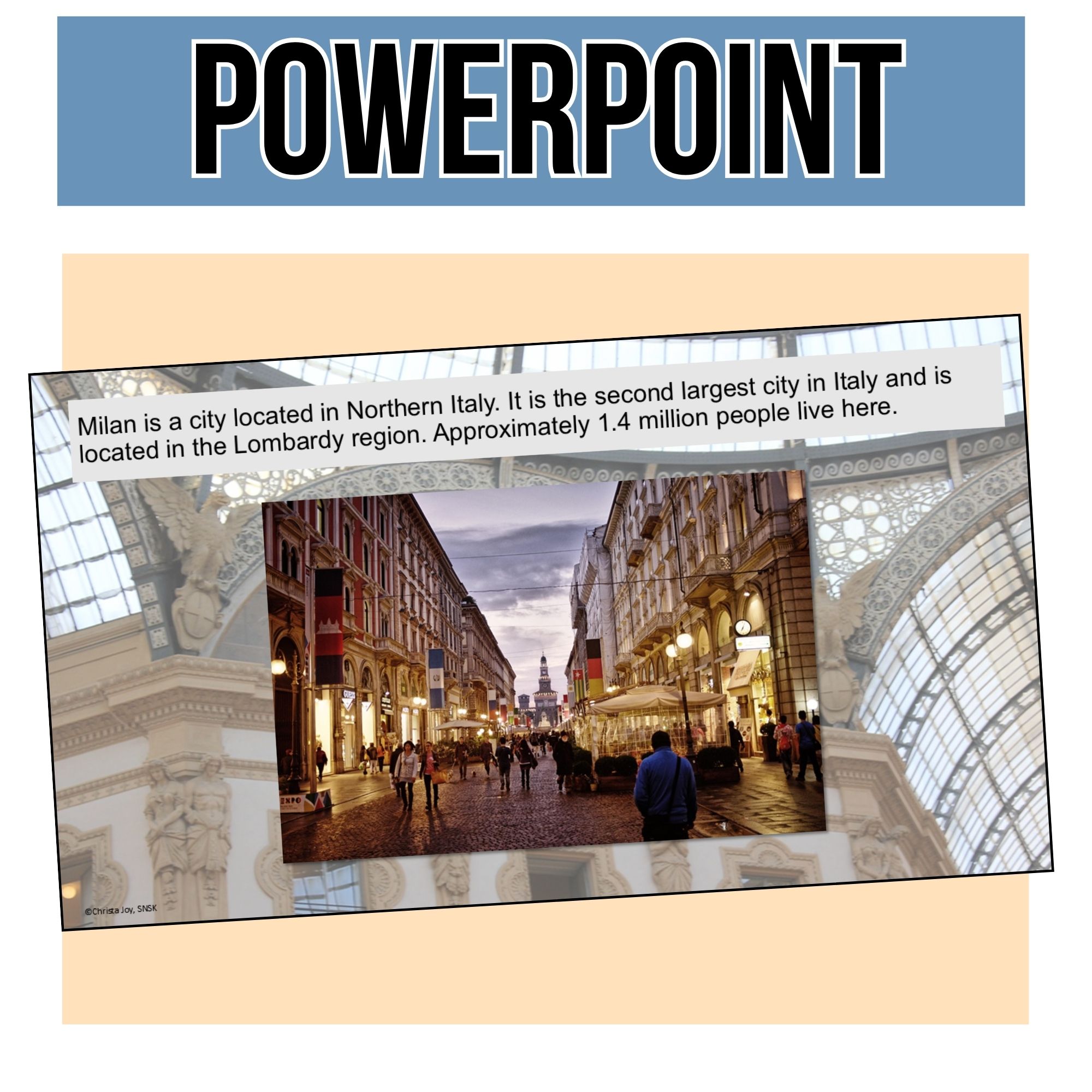
This European geography unit is on Milan and Cortina, Italy. Learn about these two cities and take your students to Italy to experience a different culture, history, and cuisine.
The units on Milan and Cortina cover:
- Geography
- Weather
- Landmarks
- Popular foods
- Fun Facts
All information is presented in a simplified yet rigorous manner, allowing students with diverse learning needs to make meaningful and authentic connections to the material.
Students have many opportunities to repeatedly learn about what makes Milan and Cortina important cities and things to see while visiting.
Additionally, many activities and assessments include multiple versions, suggestions for differentiation, and options for presentation.
Includes print and digital activities.
See the preview for a more detailed look at the contents.
*****************************************************************************
Milan and Cortina Geography Unit Includes:
⭐ This unit comes in two complete files: one in color and one in black and white.
In the zipped folder, you will find:
- Complete 5 day unit on Milan, Italy
- Complete 5 day unit on Cortina, Italy
Activities:
- Vocabulary board (one for each unit)
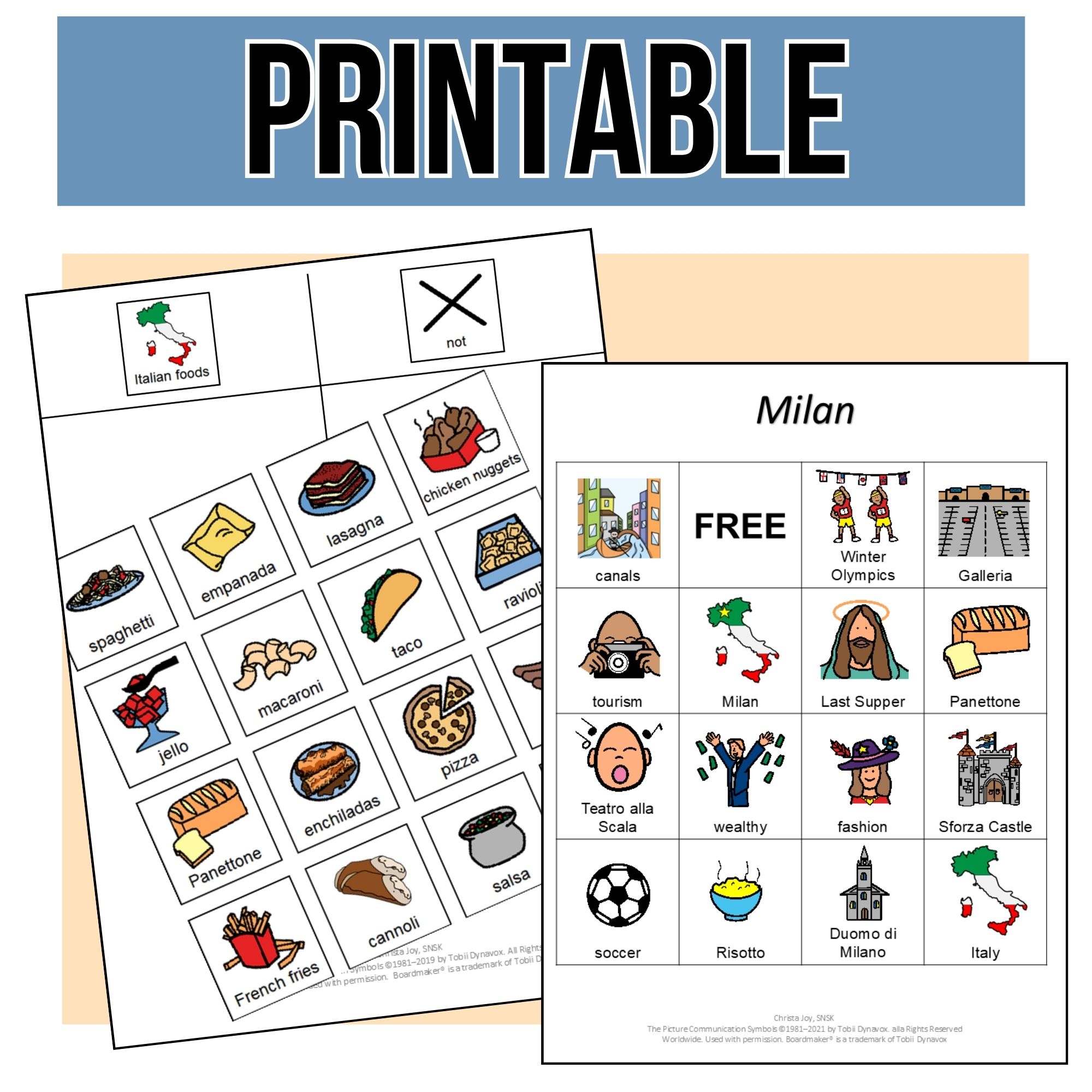
- Bingo cards (one set for each unit)
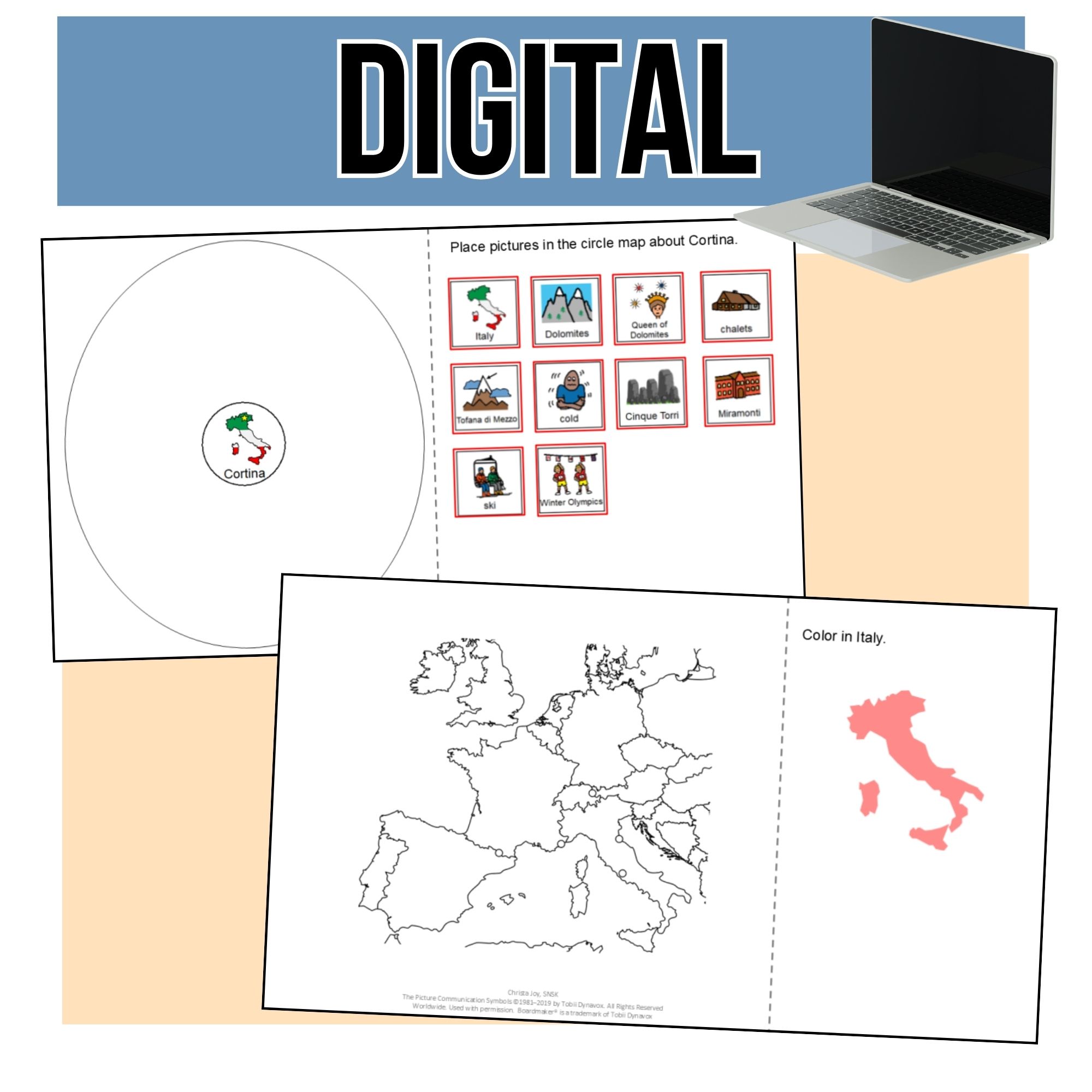
- Circle maps (plus digital version)
- Identify Italy, Milan, and Cortina on maps (plus digital version)
- Sorting Italian foods (plus digital version)
- Color in the Italian flag
- Writing prompts (plus digital versions)
- Quizzes (plus digital versions)
- Picture recipe for Italian Ice
*****************************************************************************
Much of what I have learned about curriculum development is incorporated into these units. For example, do not be afraid of repetition. Students with significant disabilities must have the opportunity to experience material over several days to fully assimilate what is being taught. Additionally, incorporating visual supports into your printables and class activities helps students focus more on the content you present, rather than the mechanics of what is expected. Finally, ask questions. Good questions!! Regardless of the material, asking students good questions will push them to think more deeply than before.
$8.00
Lorem.